Table of Contents
ToggleBaking a pork roast might sound like a culinary challenge, but it’s easier than convincing your cat to take a bath. With the right techniques and a sprinkle of patience, anyone can transform a simple cut of pork into a mouthwatering masterpiece. Imagine the aroma wafting through the kitchen as the roast cooks to perfection—your family will think you’ve summoned a gourmet chef!
Preparing the Pork Roast
Preparing a pork roast involves careful selection and gathering of ingredients. Focus on these key steps to achieve optimal results.
Selecting the Right Cut
Choosing the correct cut sets the foundation for a successful roast. Popular options include pork loin, pork shoulder, and pork belly. Pork loin offers lean meat that’s perfect for roasting and produces tender results. Pork shoulder contains more fat, adding flavor and moisture during cooking. Pork belly, known for its rich flavor, delivers a succulent and satisfying dish. Look for marbling in the meat; this indicates flavor and tenderness. Freshness matters too, with vibrant color and firm texture showing quality.
Ingredients Needed
Gathering essential ingredients enriches the roast’s flavor. The primary ingredients include a pork roast, salt, pepper, and olive oil. Experiment with herbs such as rosemary, thyme, and garlic for added depth. Vegetables like carrots, onions, and potatoes serve as aromatic bases. Stock or broth contributes moisture during cooking. A meat thermometer ensures accurate doneness, achieving that perfect internal temperature of 145°F. Prepare these items before starting; this organization streamlines the process and enhances efficiency.
Marinating the Pork Roast
Marinating the pork roast enhances its flavor and tenderness. Different marinades contribute unique tastes, making the dish irresistible.
Recommended Marinades
A few popular marinades for pork roast include teriyaki sauce, garlic and herb blend, and apple cider vinegar. Teriyaki sauce adds a sweet and slightly salty profile. Garlic and herb blend introduces aromatic flavors, bringing depth to the meat. Apple cider vinegar helps tenderize the meat while providing a tangy taste. Mixing soy sauce, brown sugar, and ginger produces a savory option. Easily chosen combinations elevate the overall flavor.
Marinating Techniques
Several techniques exist for marinating a pork roast effectively. Begin by placing the pork in a resealable plastic bag or shallow dish for easier covering. Cover the meat evenly, ensuring all surfaces have contact with the marinade. Refrigerate the pork roast for at least four hours; longer marination amplifies the taste. Turning the meat occasionally allows for uniform flavor absorption. Prioritizing a marination time of up to 24 hours maximizes tenderness and taste.
Baking the Pork Roast
Baking a pork roast requires precise techniques and a careful approach. Follow the steps below to achieve a mouthwatering result.
Preheating the Oven
Preheat the oven to 350°F. Achieving this temperature ensures even cooking throughout the pork. An oven thermometer can help verify accuracy. Allow about 15 minutes for the oven to reach the desired temperature. Additionally, arranging the oven racks to the center position promotes optimal heat distribution. A properly preheated oven significantly enhances the roast’s flavor and texture.
Cooking Time and Temperature
Cooking time depends on the pork roast’s weight. For a general guideline, allow approximately 20 minutes per pound. Use a meat thermometer to check the internal temperature. The pork should reach 145°F for safety and optimal juiciness. Checking the temperature at the thickest part of the roast ensures the most accurate readings. Resting the pork for 10-15 minutes after baking allows juices to redistribute. This step guarantees a tender and flavorful roast ready for slicing.
Serving Suggestions
Serving a pork roast offers countless possibilities for delightful accompaniments. These enhance the meal and complement the roast’s flavors beautifully.
Side Dishes to Pair
Roasted vegetables pair well with a pork roast. Carrots, potatoes, and Brussels sprouts add color and texture to the plate. Additionally, creamy mashed potatoes amplify the richness of the pork. Green beans sautéed with garlic offer a fresh contrast. Apple sauce provides a sweet touch that balances savory notes, while coleslaw adds a crunchy element, enhancing each bite. Consider adding a simple salad for freshness, too.
Presentation Tips
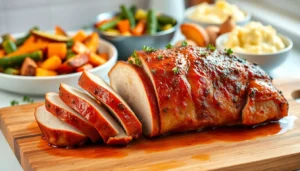
Presentation matters when serving a pork roast. Slice the roast into even pieces, showcasing the juicy interior. Arrange the slices artfully on a platter to create an inviting display. Garnish with fresh herbs, like rosemary or parsley, for a pop of color. Place side dishes in complementary bowls around the roast to create a vibrant feast. Finally, drizzle a bit of pan juices over the meat before serving for added flavor and visual appeal.
Baking a pork roast is a rewarding culinary adventure that anyone can master. With the right cut of meat and a few essential ingredients, it’s possible to create a dish that impresses family and friends alike. The techniques discussed not only ensure a flavorful and tender roast but also elevate the entire dining experience.
Taking the time to marinate and carefully monitor cooking temperatures makes all the difference. Once the roast is perfectly baked and rested, it transforms into a centerpiece that’s both delicious and visually appealing.
By following these guidelines and adding personal touches, anyone can enjoy the satisfaction of serving a homemade pork roast that delights the senses.